
12 Jun 2026
Tractor lights – how can modern LED lighting improve work efficiency and safety?
Tractor lights have a direct impact on work pace, maneuvering precision, and the safety of both the operator and the surrounding environment. Proper work lighting determines whether tasks can be carried out safely after dark, in fog, or during rain. Tractor work lights should provide excellent visibility in all conditions, day and night, while also fulfilling signaling functions on public roads. Today, LED technology has become the standard in tractor lighting systems.
Agricultural machinery lights – work lighting for tractors and more
Lighting in agricultural machinery plays a crucial role in ensuring safety during nighttime operations or in conditions of limited visibility. For this reason, tractor lights must be designed to support the operator throughout every stage of work — from plowing, sowing, and harvesting to transport and yard maneuvers. High-quality work lighting not only improves vehicle visibility but also reduces eye strain, which is especially important during long hours of fieldwork. Work lights enable operations to continue after sunset by providing excellent illumination. Effective tractor lighting is essential for carrying out precise fieldwork at night, increasing both productivity and safety.
It is worth noting that tractor lights are not used solely to illuminate the road ahead. Their applications are much broader, ranging from lighting work areas and loading zones to illuminating farm buildings, where precise maneuvering and the elimination of shadows are critical for accurately judging distances. This is why properly selected lighting improves not only working comfort but also the overall safety of the entire farm.

LED lights vs. traditional bulbs – why do LED work lights dominate?
Until recently, most agricultural machines were equipped with conventional halogen lights. While they are inexpensive and widely available, they are increasingly being replaced by LED lights. The reason is simple: LED work lights offer superior performance while proving more economical over the long term. In particular, LED work lights are significantly more energy-efficient than traditional bulbs, helping to reduce machinery operating costs. In addition, farmers increasingly choose LED work lights because of their high performance and resistance to harsh weather conditions.
In this context, LED technology combines three key advantages that are especially important in agriculture:
- low power consumption,
- high durability and long service life,
- powerful, well-directed illumination.
In practice, this means that LED work lights do not overload the electrical system while still delivering strong illumination even in situations where conventional light sources begin to lose effectiveness. Although halogen lamps remain a traditional solution, LED lights provide greater brightness with lower energy consumption, making them a more efficient choice.
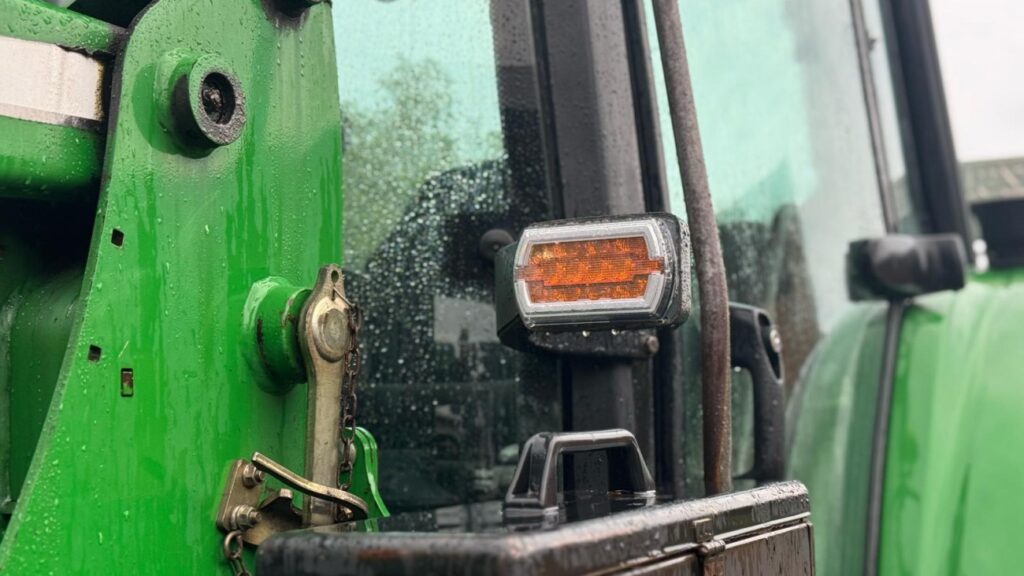
LED work lighting in harsh weather conditions
Agriculture rarely takes place under ideal conditions. Mud, dust, moisture, extreme temperatures, and vibrations generated by rough terrain are part of everyday farm work. Therefore, LED work lights should be selected not only based on brightness but also on durability. A quality model must withstand demanding weather conditions and maintain full functionality despite intensive use.
LED work lights are highly resistant to moisture, mud, dust, and impacts, making them an ideal solution for demanding agricultural environments. Moreover, many LED work lights feature IP67 or IP68 protection ratings, ensuring complete protection against dust and water. These specifications confirm that the equipment remains fully operational even after heavy rainfall or during work in dusty conditions.
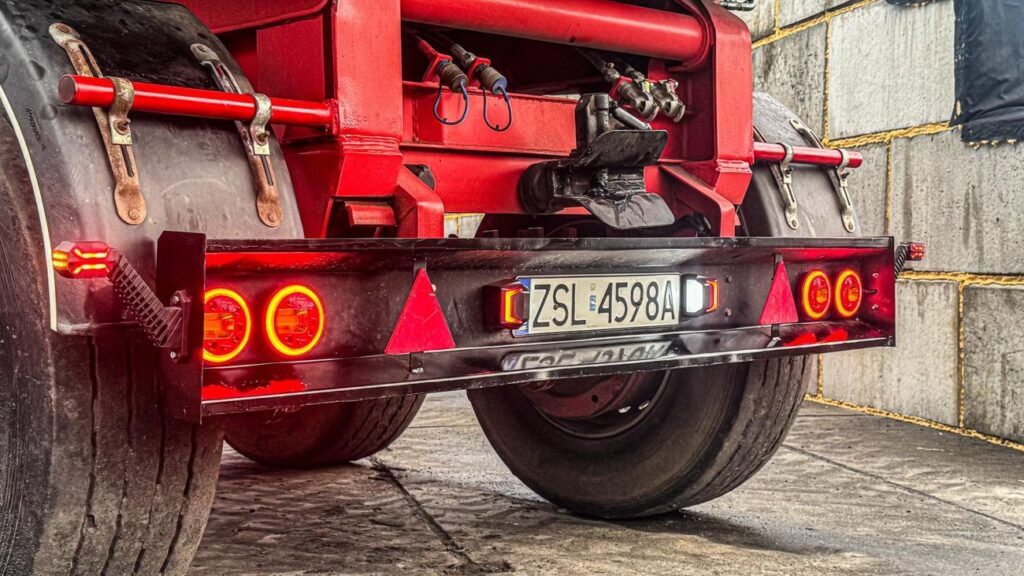
LED work lighting – safe operation of agricultural machinery
Now that we have reviewed the advantages of LED lights, it is equally important to consider the proper selection of lighting systems. Lighting choices should never be random. Agricultural tractors operate in a wide variety of conditions, making it essential to match lighting to specific tasks. For example, working with a front loader requires different lighting than spraying operations, while transport after dark has its own unique requirements.
For this reason, the choice of work lights should be based on the specific nature of agricultural work to ensure both safety and ease of use. Properly selected LED work lighting not only improves concentration but also enhances comfort. Operators can identify obstacles more quickly, better assess the depth of ruts, and more clearly see implements and surrounding objects. All of this reduces the risk of errors while increasing overall work efficiency.
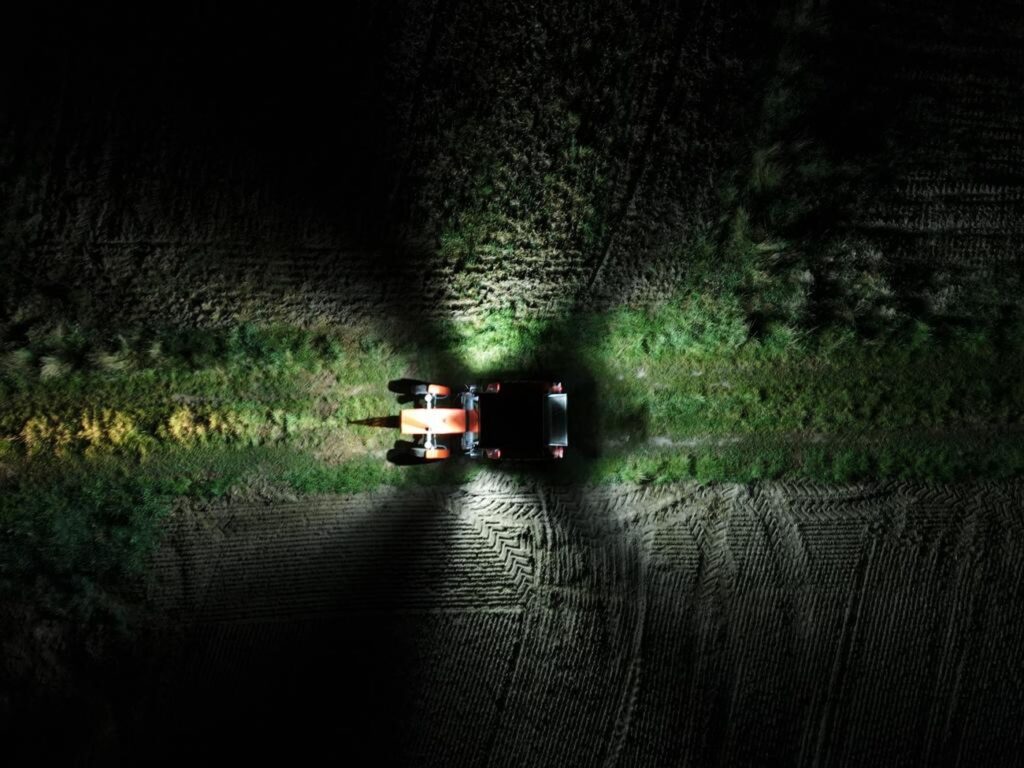
A wide range of models in our offer – work lights, road lights, warning lights, and marker lights
Modern tractors use several types of lighting systems. The most important include work lights, road lights, warning lights, and license plate or marker lights. Each serves a different purpose, together forming a system responsible for vehicle visibility both in the field and on the road.
It is also important to keep in mind several legal requirements that define lighting standards for agricultural machinery:
- Slow-moving vehicles are required to use lights that increase road visibility.
- Tractors must meet specific lighting requirements in order to operate legally on public roads.
- Tractors wider than 2.1 meters must additionally be equipped with marker lights.
In addition to powerful work lights, operators must ensure that position lights, turn signals, license plate lights, and marker lights are properly installed and functioning. These components directly affect vehicle visibility and, consequently, road safety on public highways.
Well-designed LED lights combine functionality, brightness, and low power consumption, often providing the best lighting conditions for modern agriculture. HORPOL’s product range includes a wide variety of lighting solutions. Feel free to contact us to learn more.
