4 May 2026
Warning lights – when are they mandatory and who must use them?
Warning lights are an important piece of vehicle equipment that often determines whether other road users notice a hazard early enough. They are not merely a visual accessory — this type of lighting has a real impact on the safety of people, equipment, and infrastructure. Importantly, their use is regulated by law, as well as by technical requirements concerning light color and visibility. They are particularly required for vehicles performing work on or near roads (such as road maintenance or cleaning vehicles), slow-moving vehicles, and vehicles with unusual dimensions.
When is warning lighting mandatory?
The obligation to use warning signals primarily applies in situations where a vehicle is carrying out work on the road or in its immediate vicinity, as well as when its presence or manner of movement may increase the risk for other road users. Vehicles performing cleaning, repair, or modernization work should emit yellow flashing signals. Vehicles that, due to their construction, load, or operation, may pose a safety risk should also use such signals. Additionally, a towed vehicle may display yellow warning signals instead of using a warning triangle in order to improve visibility for other road users.
Warning lights are therefore required whenever a vehicle ceases to be a “standard” participant in traffic and begins serving a signaling function. This also includes situations such as roadworks, towing, or transporting oversized loads that require additional marking because of their dimensions. It should be emphasized that warning lights may only be used in legally permitted situations — using such signals for any other purpose is prohibited.

Warning lights – colors and certifications
Warning lights are available in various colors, but in practice yellow (amber) and blue are the most common. Blue warning lights are reserved for emergency vehicles, along with variable-tone audible warning signals. Yellow warning lights, on the other hand, are used in standard road traffic whenever there is a need to warn other road users about hazards, roadworks, or unusual vehicle behavior. This category includes beacon lights, signaling lamps, strobe lights, and strobes installed on service, technical, municipal, or slow-moving vehicles.
Another very important issue is certification. Whether it concerns traditional beacon lights, modern strobe lamps, or other signaling lighting, such devices should be properly type-approved. On the market, you can find lamps marked in accordance with ECE regulations, including ECE R65 approval and the E-mark. Proper certification confirms that a given warning light or signaling strobe meets specific technical requirements and may be used as intended. This also means that warning lighting should never be selected randomly — the light color, flashing pattern, signaling function, and certification must correspond to the vehicle’s role and operating conditions.
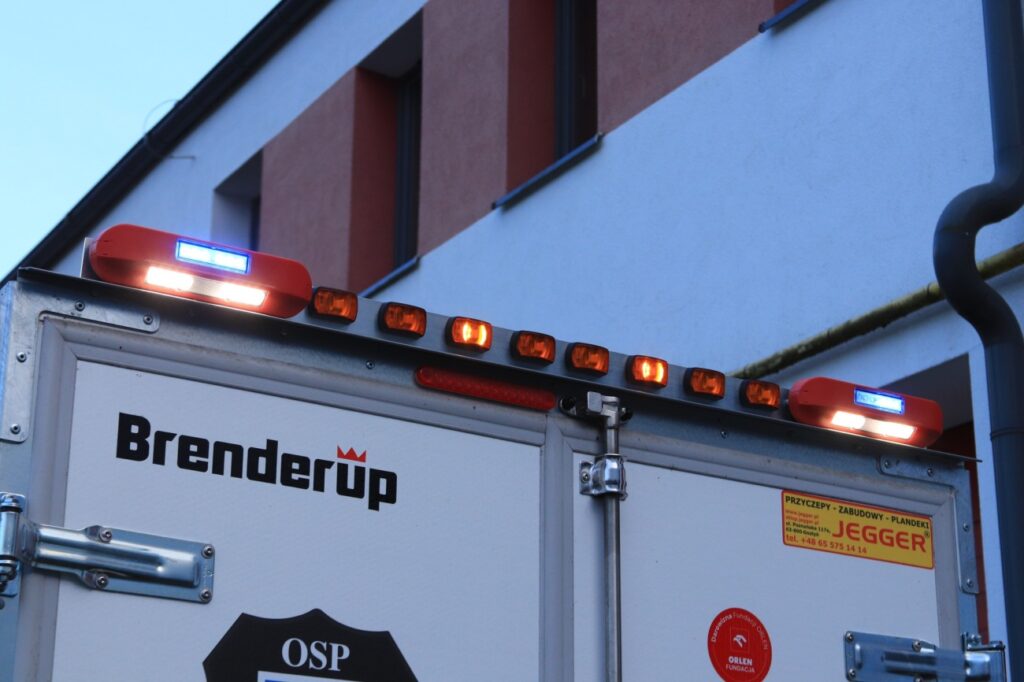
Why do LED warning lights dominate modern applications?
Today, LED warning lights are undoubtedly the most popular option. This solution offers numerous benefits — they are energy-efficient, durable, and designed for demanding working conditions. Moreover, LED lamps can provide a very high level of sealing protection, including compliance with the IP68 standard. This combination ensures maximum safety for special-purpose vehicles while reducing the load on the electrical system and minimizing operational problems compared to conventional bulbs.
LED warning lights also offer several additional advantages:
- higher brightness with lower energy consumption;
- instant activation and faster achievement of full intensity, which is crucial in emergency situations;
- increased resistance to shocks and vibrations;
- less frequent replacement due to longer service life;
- excellent visibility even in sunny conditions.
These features are especially important in environments where machinery and vehicles are exposed to heavy-duty operation. As a result, LED warning lights perform exceptionally well in a wide range of applications — including construction sites, emergency medical services, fire departments, farms, and many others. HORPOL offers a wide selection of LED warning light designs, making it easy to match the right model to different types of machinery and vehicles.
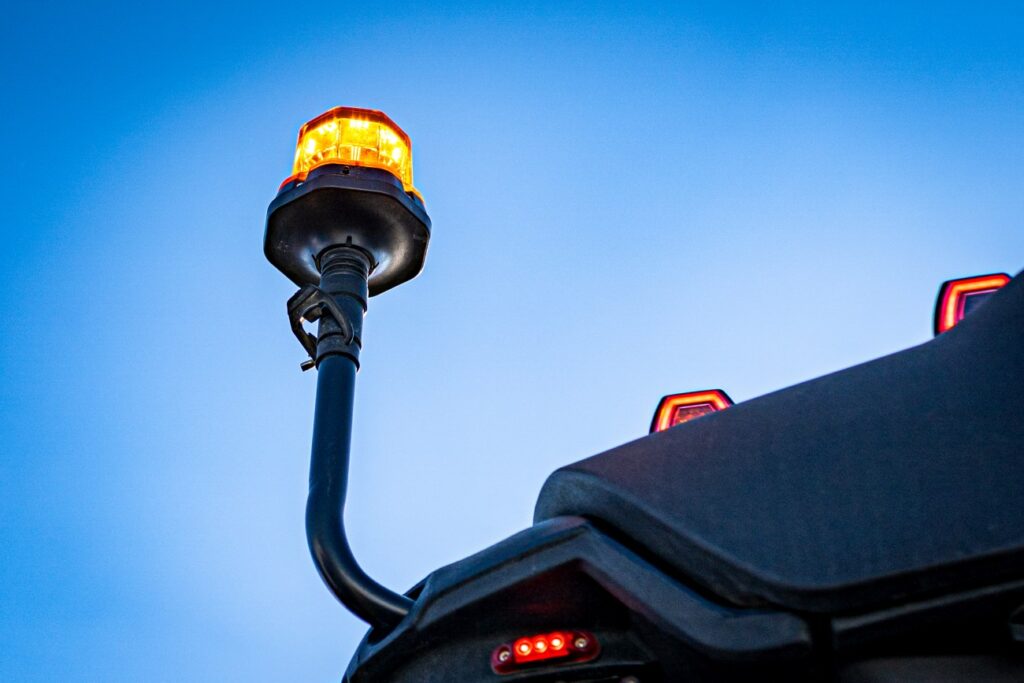
LED warning lights in practice – from emergency services to agriculture and transport
LED warning lights are widely used in emergency vehicles and all types of special-purpose vehicles, including technical service vehicles. They are the right choice wherever visibility in difficult conditions and quick signal recognition by other road users are essential. Importantly, their use is regulated by law — warning lights are mandatory for specific groups of vehicles in defined situations, and the lighting itself must have ECE R65 certification.
The main purpose of warning lights is to signal the presence of vehicles or obstacles that may pose a potential hazard to road traffic. Therefore, they must be designed to remain visible even in poor weather and limited visibility conditions. It is worth choosing models that are resistant to water, dust, and intensive use — products of this type can be found in the HORPOL product range. We invite you to contact us and explore our offer of warning lights and other lighting solutions.